Uncategorized

Hartog v Colin & Shields [1939] 3 All ER 566

 English Contract Law , Subjective approach, Mistake 

Court: High Court 

Case Opinion: Singleton J 

Fact: 

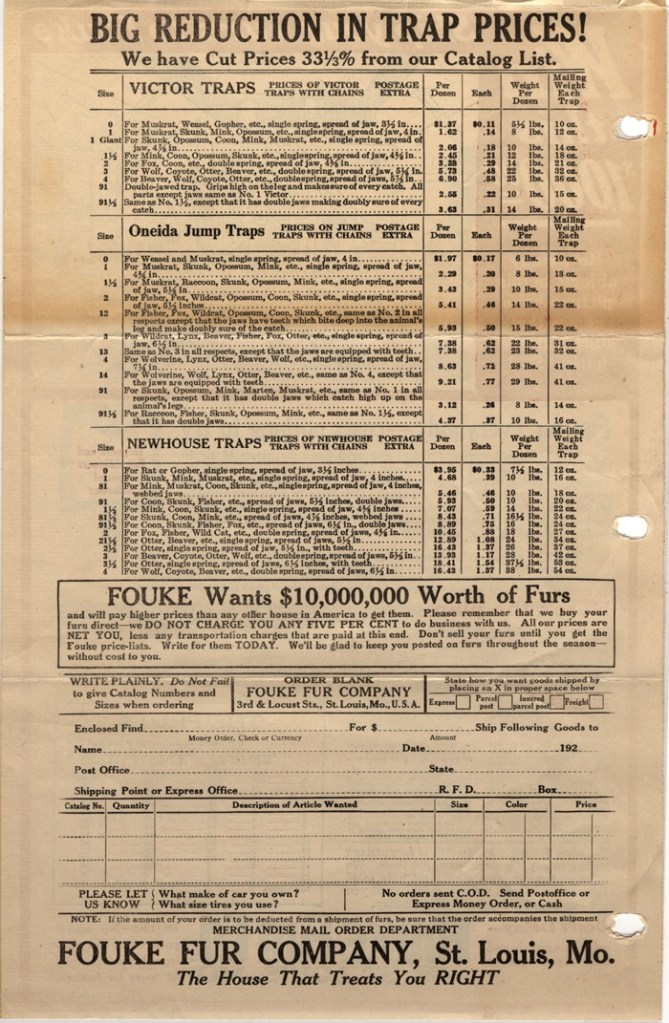
The defendant agreed to sell 30000 Argentine rabbit skin to the claimant per price which is £1250, but by mistake offered them at a price per pound (by weight). In the pre-sale negotiations, reference had always been made to the price per price and normally this type of skin were sold at price per price.The defendant refused to sell the plaintiff the skins per pound and the claimant sued for the breach of contract. 

Issue:

Where the contract binding?

Held: 

Since the claimant could not reasonably have supposed that the offer contained the offeror’s real intention, there was no binding contract. 

Note: 

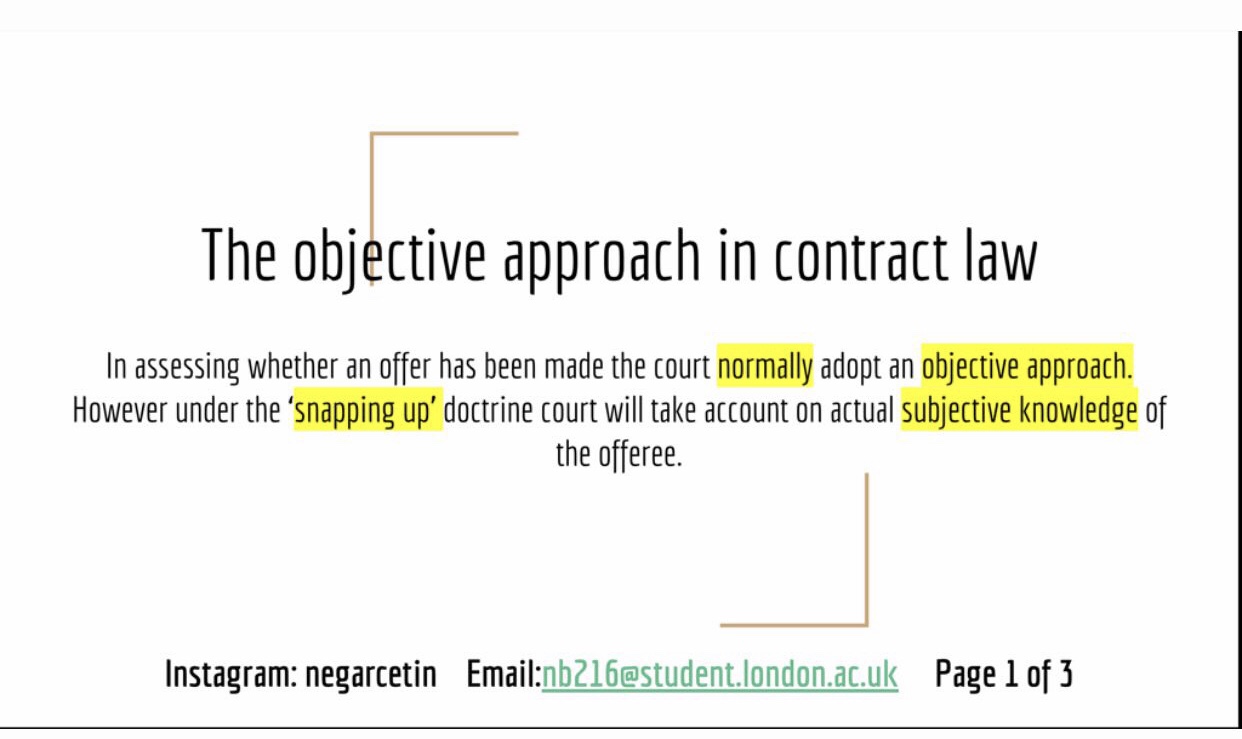
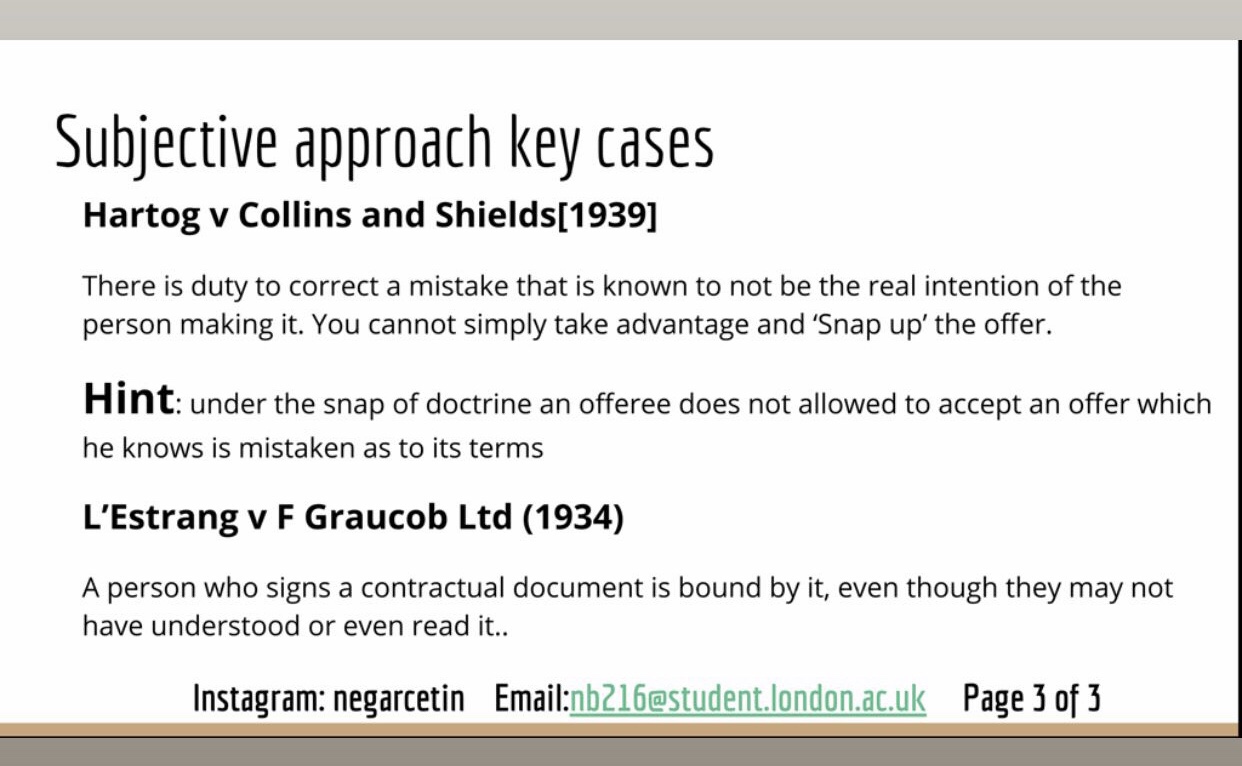
Subjective approach may be relevant under the snap up doctrine. 

There is duty to correct a mistake that is known to not be the real intention of the person making it. People cannot simply take advantage and ‘Snap up’ the offer.

Under the snap up doctrine an offeree does not allowed to accept an offer which he knows is mistaken as to its terms.
Uncategorized

Smith V Hughes (1871) LR 6 QB 597

English Contract Law Case

Court: Queen’s Bench

Case opinions: Cockburn CJ, Blackburn J, and Hannen J

 Fact:

Defendant purchased 40-50 quarters of what he thought were old oats for horse feed based on a sample he had received; the purchase was, in fact, new oats; the defendant refused to pay for the delivery of remaining order and claimant sued for breach of contract.

Issue

Could the contract be avoided as Hughes had delivered the wrong type of oats

 Held: 

The claimant’s passive acquiescence to sell the oats did not amount to a misrepresentation.

It was held that there was a binding contract between parties. An objective test revealed that a reasonable person would expect the sale of good quality oats in a similar contract since there was no express discussion of old oats.

The sample gave him the chance to inspect the oats; If a buyer has a chance to inspect goods, and purchase those goods based on his own judgment then the rule of Caveat Emptor (buyer beware) applies.

Note: 

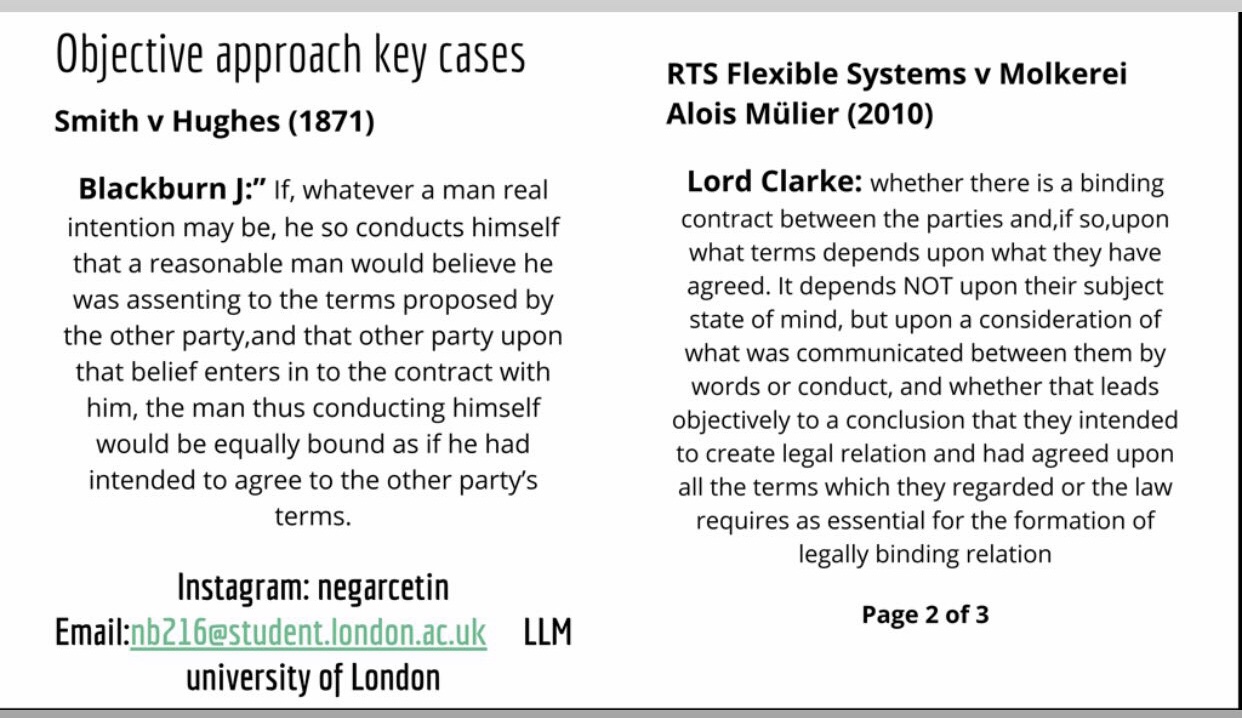
Affirmation of the principle of buyer beware, and that contractual agreements are objectively judged. More recently the same point on objective approach was made by Lord Clark in the judgment of the Supreme Court in RTS Flexible System Ltd v Molkerei Alois Müller GmbH & Co (UK Production) [2010] UKSC 14; [2010] 1 WLR 753, [45]

Auction, Contract Law

Contract Law / Auction

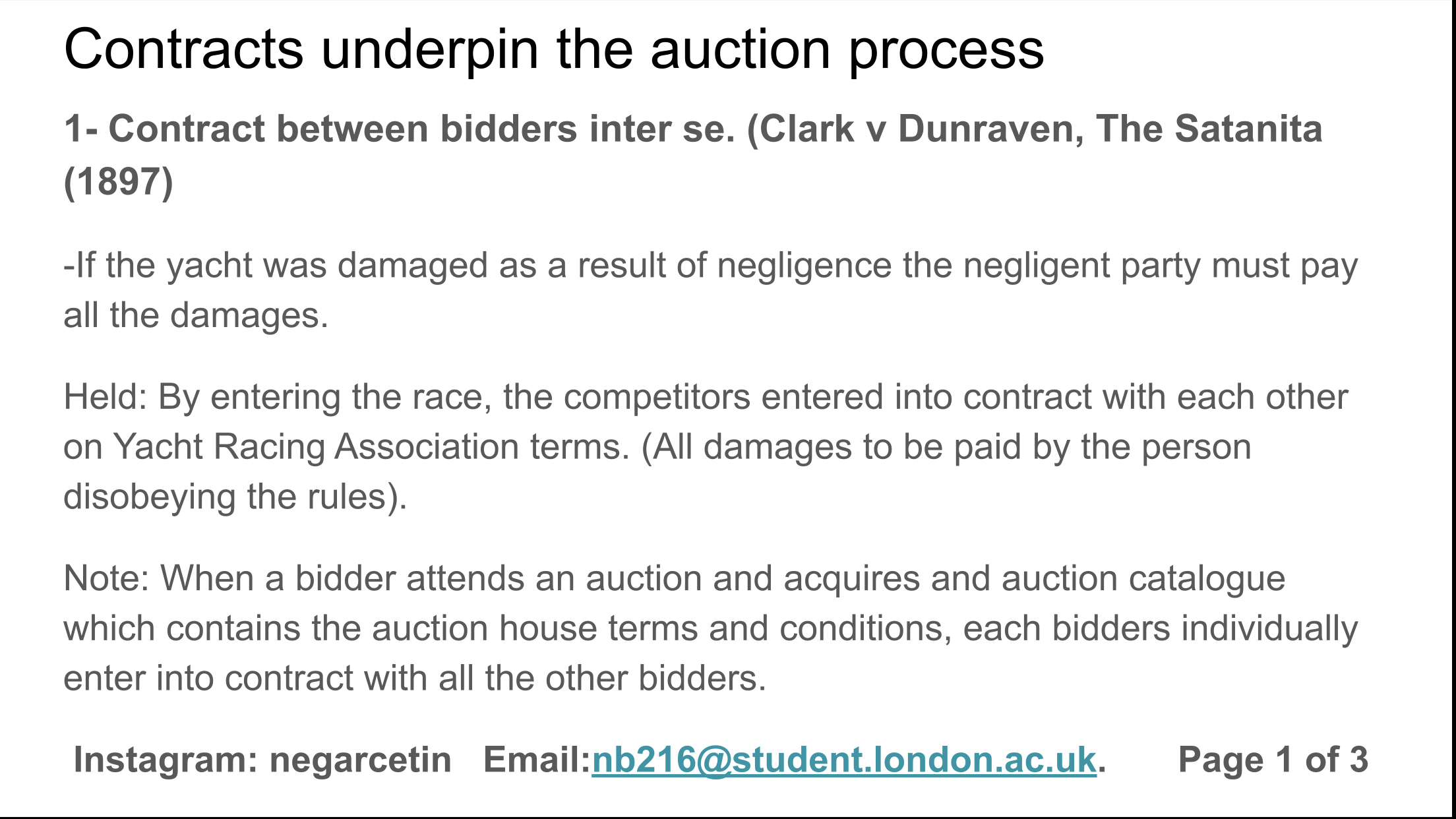
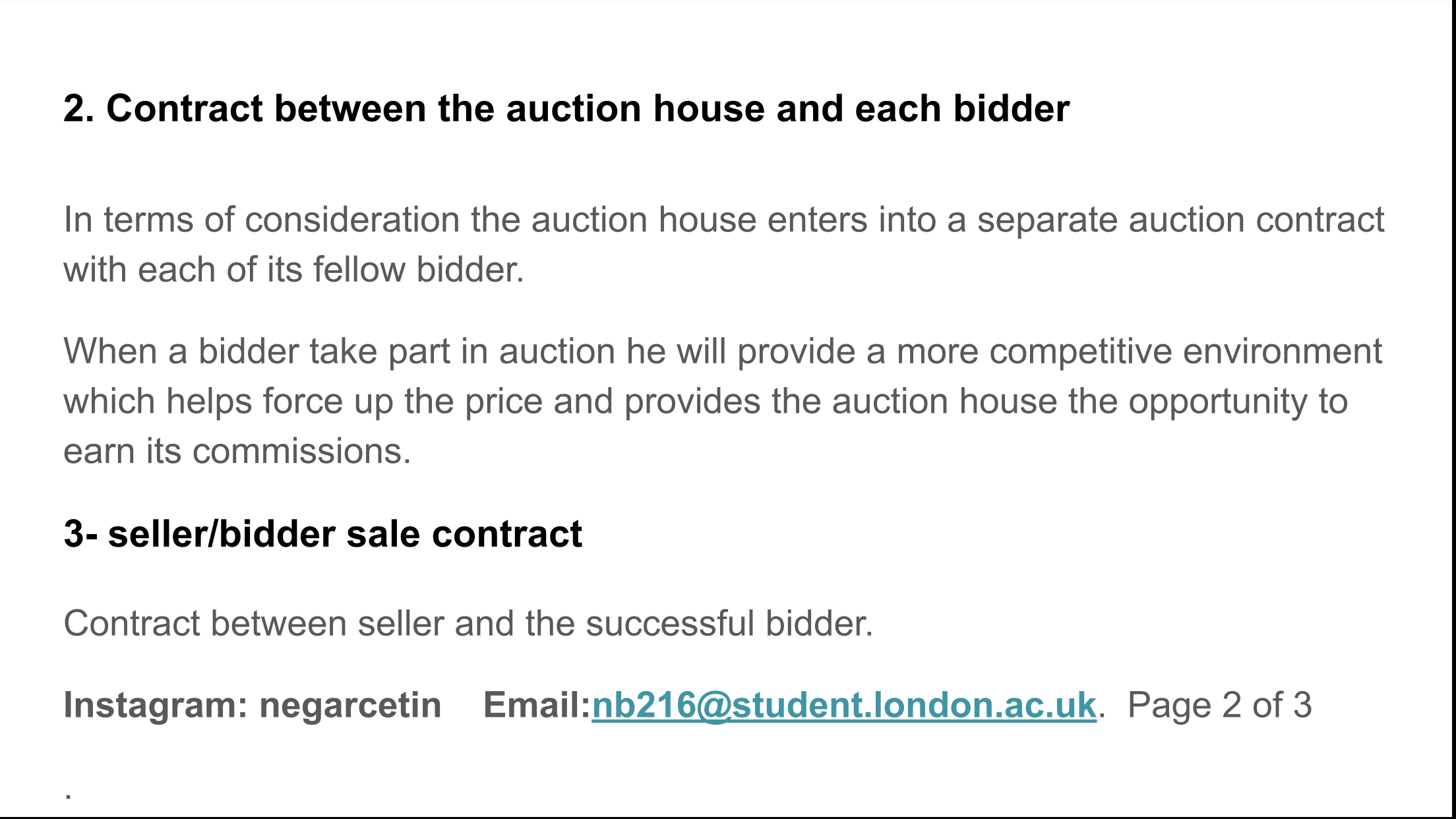
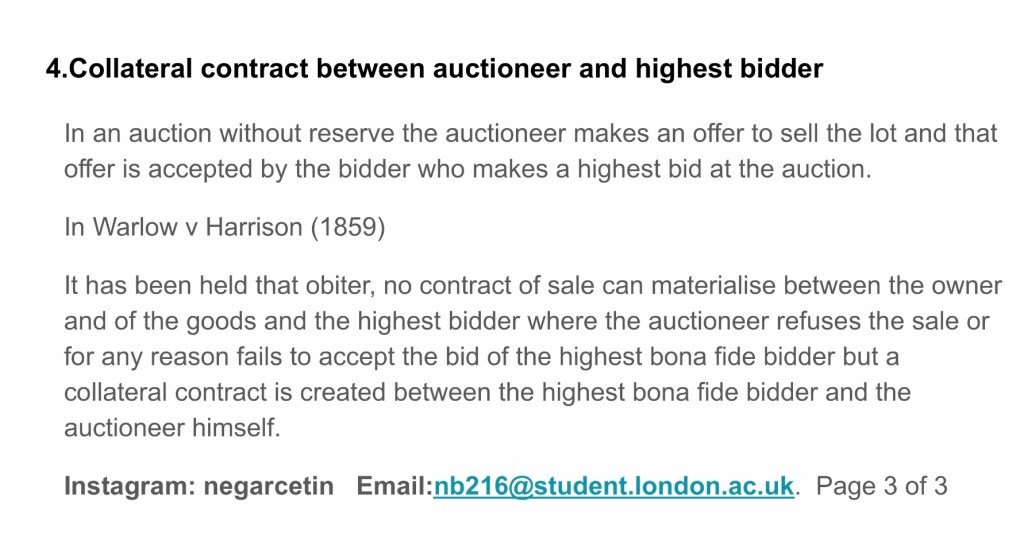
Contracts that underpin an auction process…

There are four contracts in an auction sale process.

  • Contracts between individual bidders.
  • Contracts between the Auction house and each individual bidders.
  • Contracts between seller and successful bidder.
  • Contractual contract between auctioneer and the highest bidder.