English Contract Law Case
Court: Queen’s Bench
Case opinions: Cockburn CJ, Blackburn J, and Hannen J
Fact:
Defendant purchased 40-50 quarters of what he thought were old oats for horse feed based on a sample he had received; the purchase was, in fact, new oats; the defendant refused to pay for the delivery of remaining order and claimant sued for breach of contract.
Issue
Could the contract be avoided as Hughes had delivered the wrong type of oats
Held:
The claimant’s passive acquiescence to sell the oats did not amount to a misrepresentation.
It was held that there was a binding contract between parties. An objective test revealed that a reasonable person would expect the sale of good quality oats in a similar contract since there was no express discussion of old oats.
The sample gave him the chance to inspect the oats; If a buyer has a chance to inspect goods, and purchase those goods based on his own judgment then the rule of Caveat Emptor (buyer beware) applies.
Note:
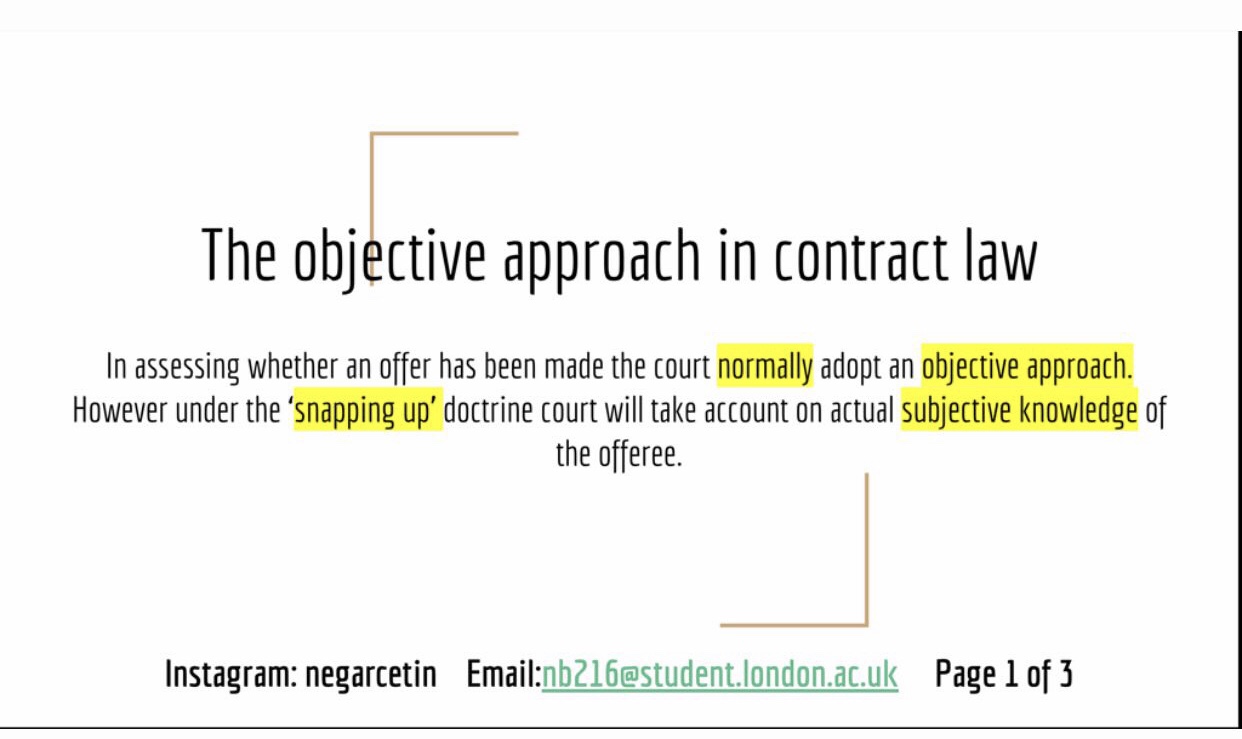
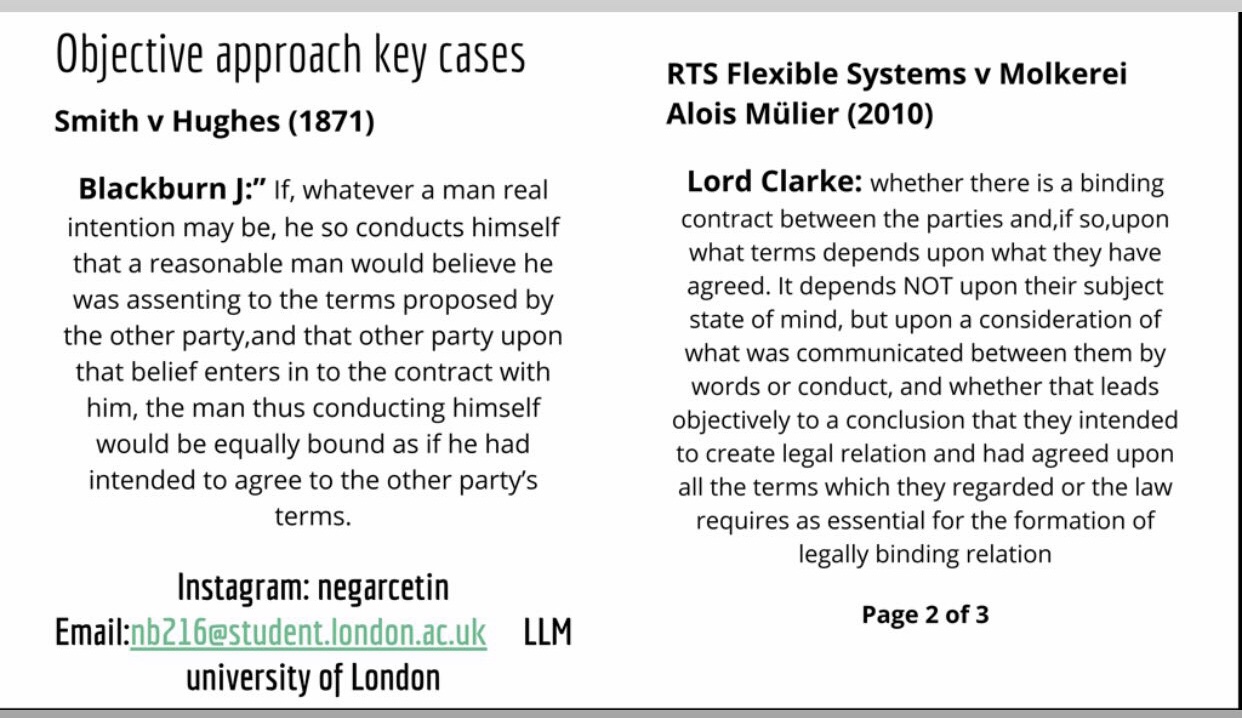
Affirmation of the principle of buyer beware, and that contractual agreements are objectively judged. More recently the same point on objective approach was made by Lord Clark in the judgment of the Supreme Court in RTS Flexible System Ltd v Molkerei Alois Müller GmbH & Co (UK Production) [2010] UKSC 14; [2010] 1 WLR 753, [45]

 Legal Resources / UK Law